

What Do You Need to Give Your Accountant at Year-End?
Preparing your end-of-year financial accounts and tax return is much easier when you have the right information ready for your accountant.
Many business owners are unsure exactly what documents they need to provide. Gathering everything ahead of time helps your accountant prepare accurate financial statements, ensures you claim all allowable deductions, and avoids delays with Inland Revenue.
Year-End Checklist – What to Give Your Accountant
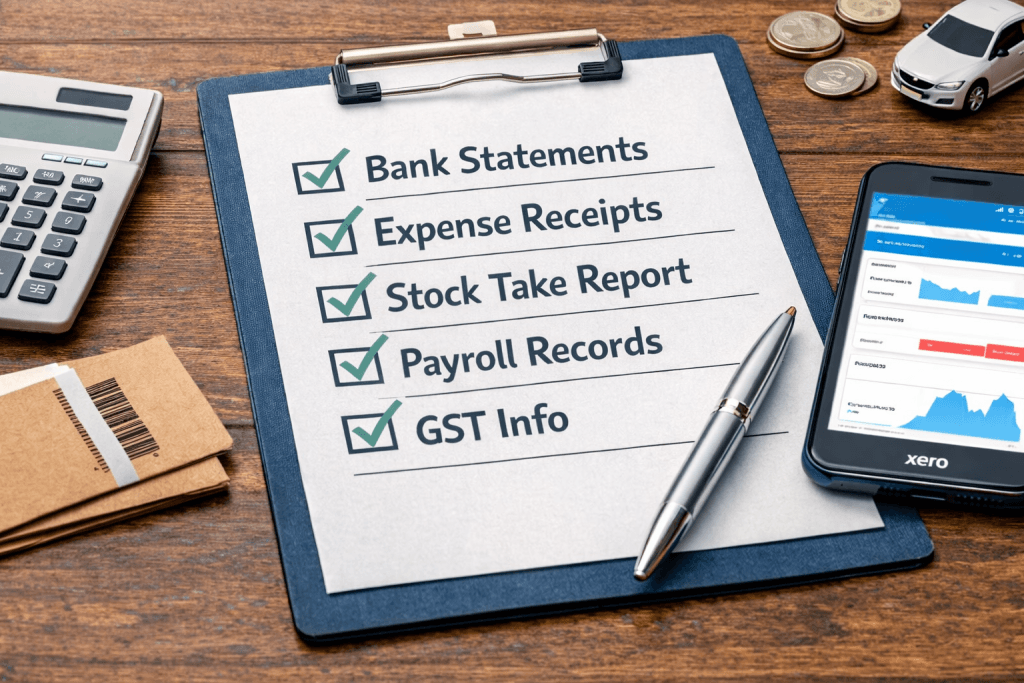
To help you prepare your end-of-year financial accounts and tax return, here is a simple checklist of the information your accountant will typically require.
✔ Bank statements for all business accounts
✔ Credit card statements used for business expenses
✔ Loan and finance statements
✔ Sales reports or income summaries
✔ Records of business expenses and receipts
✔ Asset purchase invoices (vehicles, equipment, tools)
✔ Stock take report at year-end (if you hold inventory)
✔ Payroll summaries and PAYE reports
✔ Home office expense details (if applicable)
Having this information ready helps your accountant complete your financial statements accurately and efficiently.
DNA Makes Year-End Easy with Online Forms and Systems
At DNA, we understand that gathering this information can feel time-consuming and overwhelming.
That is why we have developed simple systems to make the process much easier for our clients.
We provide structured online forms and checklists that guide you through exactly what information is required – no guesswork, no missed items.
Using our online systems means:
- You know exactly what is required for your financial accounts
- Nothing gets missed or overlooked
- The process is faster for both you and your accountant
You can view our online forms here: https://dnaca.co.nz/online-forms/
These tools are designed to take the stress out of year-end and make data collection straightforward and efficient.
Basic Business Information
Your accountant will first need some general information about your business for the financial year.
This may include:
- Confirmation of your business structure (sole trader, partnership, company, or trust)
- Any changes in shareholders, partners, or ownership during the year
- Your IRD number and GST number
- Details of any new business activities started or ceased during the year
- Updated contact details and business address
If there have been significant changes in your business operations, it is helpful to mention these early so your accountant can consider any tax implications.
Bank Accounts and Loan Information
Your accountant will need details of all bank accounts, loans, and credit facilities connected to your business.
This usually includes:
- Bank statements for all business accounts for the financial year
- Details of savings or term deposit accounts
- Loan statements for business loans, mortgages, or hire purchase agreements
- Credit card statements used for business expenses
Providing complete statements helps your accountant reconcile transactions accurately and ensures nothing is missed.
If you use accounting software such as Xero, much of this information can often be accessed directly.
.
Income Records
Your accountant needs a clear record of all income earned during the year.
This may include:
- Sales invoices issued to customers
- Income reports from accounting software
- EFTPOS or payment summaries
- Online sales records
- Rental income summaries
- Interest income statements
If you use accounting software such as Xero, much of this information can often be accessed directly.
Business Expenses
Providing details of your business expenses ensures you claim the deductions you are entitled to.
Common deductible expenses include:
- Vehicle expenses
- Office supplies
- Rent or lease payments
- Power, phone, and internet
- Insurance
- Subcontractor payments
- Advertising and marketing
- Professional fees such as legal or accounting services
Receipts, invoices, or digital records help confirm the nature of each expense.
Asset Purchases
Your accountant will need information about any assets purchased during the year.
These are typically depreciated over time.
Examples include:
- Vehicles
- Machinery and tools
- Computers and office equipment
- Furniture and fit-outs
- Equipment or plant purchases
Providing purchase invoices and dates ensures these items are recorded correctly.
Stocktake Information
If your business holds inventory or sells physical products, your accountant will require stocktake information at balance date (usually 31 March in New Zealand).
A stocktake records the value of all inventory you have on hand at balance date .
This includes:
- A list of stock items
- Quantities on hand
- Cost price per item
- Total stock value
Why Stock Take Information Is Important
Stock values are essential for calculating your cost of goods sold, which directly impacts your profit and tax position.
Accurate stock figures ensure:
- Your financial accounts reflect the true performance of your business
- Your taxable income is calculated correctly
- Your tax return complies with Inland Revenue requirements
Keeping stock records up to date during the year makes this process much easier.
Payroll and Employee Information
If you employ staff, your accountant will require payroll information such as:
- Payroll summaries
- PAYE reports
- Wages and salary details
- Employer KiwiSaver contributions
- Employee benefits
GST and Tax Information
If your business is GST registered, your accountant will review your GST activity during the year.
This includes:
- GST returns filed during the year
- Any adjustments made
As DNA acts as a tax agent for our clients, we already have access to your Inland Revenue records, including:
- Tax notices
- Statements of accounts
- Provisional tax information
- Payments made to Inland Revenue
This means you generally do not need to provide these separately, helping streamline the process.
Home Office or Mixed-Use Expenses
If you run part of your business from home, your accountant may need:
- Area of home used for business
- Household expenses (power, rent, interest, rates)
- Business use percentages
This ensures accurate calculation of deductions.
Why Gathering This Information Can Feel Overwhelming
For many business owners, preparing information for end-of-year accounts and tax returns can feel like a big job.
Records may be spread across different places, and it is easy to feel unsure about what is required.
At DNA, we understand this – and that is exactly why we focus on making the process simple, structured, and manageable.
How Accounting Software Like Xero Can Help
Using cloud accounting software such as Xero can make a significant difference.
Benefits include:
- Automatic bank feeds
- Real-time tracking of income and expenses
- Digital receipt storage
- Up-to-date financial reporting
- Simplified GST and tax compliance
Instead of scrambling at year-end, your information is already organised.
DNA Can Help You Stay on Track All Year
If you want to make year-end easier going forward, DNA can help you:
- Set up and optimise Xero accounting software
- Provide training and ongoing support
- Help automate processes
- Keep your records organised throughout the year
This makes preparing your financial accounts and tax return faster, smoother, and far less stressful.
FAQ – End of Year Accounts and Tax Returns
To prepare your end-of-year financial accounts and tax return, your accountant will typically need bank statements, income records, expense details, loan information, asset purchases, payroll reports, and stock take information (if applicable).
Having this information organised helps ensure your financial statements are accurate and your tax return is completed efficiently.
A year-end checklist is a list of the key documents and information your accountant needs to prepare your financial accounts and tax return.
This usually includes income reports, expenses, bank statements, asset purchases, payroll records, and stock take information. Using a checklist helps ensure nothing is missed.
If DNA is your tax agent, you generally do not need to provide Inland Revenue statements, notices, or provisional tax information.
We already have access to your IRD records, which helps streamline the process and reduces the amount of information you need to gather.
A stocktake is a record of all inventory your business holds at the end of the financial year (usually 31 March in New Zealand).
It includes quantities and cost values of stock on hand and is used to calculate the cost of goods sold, which directly impacts your profit and tax position.
It is best to provide your information as soon as possible after your balance date.
Providing information early allows your accountant to prepare your financial accounts and tax return without delays and gives you clarity on your tax position sooner.
The easiest way to simplify year-end accounting is to use cloud accounting software such as Xero and keep your records up to date throughout the year.
DNA can also provide online forms, systems, and guidance to make collecting and submitting your information quick and straightforward.
If your records are not fully organised, don’t worry – this is very common.
DNA can help you work through what is missing, organise your information, and set up better systems so that future end-of-year accounts and tax returns are much easier to prepare.

Need Help Preparing Your End-of-Year Accounts?
If you are unsure what information you need or want to make the process easier, DNA can help.
We work with businesses across New Zealand to prepare financial accounts, tax returns, and ongoing accounting support.
Contact DNA today to get your year-end sorted with confidence.

